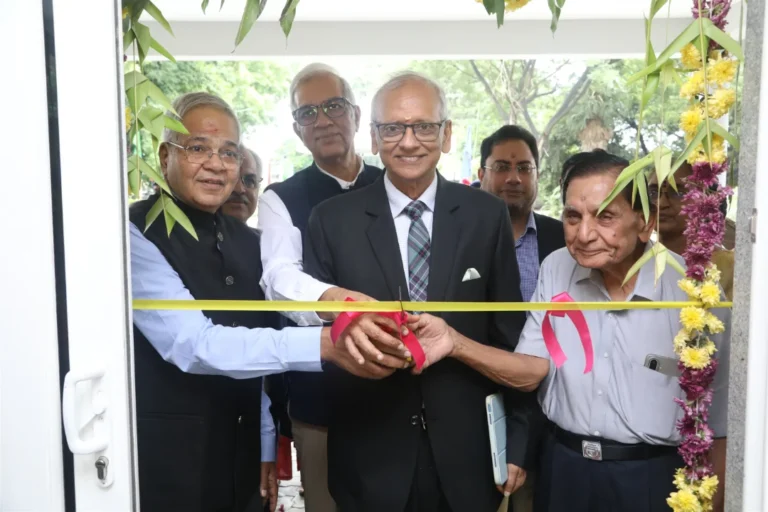



The Nutrition seminar held at JP Hotel Chennai was attended by more than 100 participants, including nutritionists, dietitians, healthcare professionals, food processors, R&D professionals, influencers, bloggers and members of the press, reflecting growing interest in science-based nutrition information and practical applications of blueberries in India.
The programme brought together global research, clinical nutrition perspectives, culinary applications and an expert panel discussion focused on translating scientific findings into responsible and practical dietary guidance.
A key highlight of the programme was the special address by Dr. J. Radhakrishnan, IAS, Director General of Training & Director, Anna Institute of Management, Government of Tamil Nadu.
Dr. Radhakrishnan highlighted the importance of credible nutrition education and the responsibility of professionals and institutions to communicate scientific information in a way that is accurate, practical and understandable to consumers. His remarks added an important public-health perspective to the seminar and reinforced the need for evidence-based communication around food, nutrition and healthy dietary practices.
Welcoming the participants, Raj Kapoor, India Representative, U.S. Highbush Blueberry Council, spoke about USHBC’s efforts to engage nutrition professionals, healthcare practitioners, chefs, food manufacturers and other stakeholders in India through scientific education, research communication and practical applications.
He emphasized that the objective of such programmes is to create a meaningful bridge between emerging nutrition science and everyday food choices, while ensuring that health-related information is communicated responsibly.

Latest Scientific Research in Focus
The scientific foundation of the seminar was provided through a specially recorded keynote presentation by Dr. Leslie Wada, PhD, RD, Senior Director, Nutrition & Health Research, U.S. Highbush Blueberry Council, titled “The Science Behind Blueberries: Latest Research and Global Perspectives.”
Dr. Wada reviewed the evolving body of research on blueberries and their naturally occurring plant compounds, particularly anthocyanins, which contribute to their characteristic blue colour.
Her presentation covered research relating to areas such as cardiometabolic health, gut microbiota, exercise and immune response, and psychological well-being, while also emphasizing the importance of understanding the quality and type of scientific evidence.
Participants were reminded that observational research may identify associations, while randomized controlled trials help examine specific physiological outcomes. Individual foods should therefore be considered within the context of a balanced diet and healthy lifestyle rather than being positioned as treatments for medical conditions.
Clinical Nutrition and Practical Applications
Dr. Kavitha Reddy, CEO & Founder, Sreya Nutrition, presented “Blueberries in Clinical Nutrition: Practical Applications for Health Professionals.”
She discussed the nutritional profile of blueberries, including dietary fibre and naturally occurring phytochemicals such as anthocyanins, while reviewing research relating to glucose metabolism, cardiovascular health, oxidative stress, brain health and gastrointestinal microbiota.
Dr. Reddy also highlighted the versatility of blueberries across different formats, including fresh, frozen, dried, puree, powder and concentrate, and discussed how nutrition professionals can incorporate them into practical dietary guidance.
A key message from the session was the importance of translating scientific research into useful consumer advice without overstating findings or making unsupported medical claims.
Bringing Blueberries into Indian Foods
The seminar also focused on practical culinary applications through a presentation by Dr. Krithika Radhakrishnan, Celebrity Chef & Culinary Consultant, titled “Creative USA Blueberry Recipes for Healthy Everyday Living.”
Dr. Krithika demonstrated how blueberries can be incorporated into familiar Indian and contemporary preparations across breakfast, beverages, snacks, savoury foods and desserts.
Her presentation featured applications such as Blueberry & Ragi Pancakes, Blueberry Shrikhand, Blueberry Chutney, Blueberry Raita, Blueberry Lassi, Blueberry Bhel, Blueberry Pachadi and blueberry-based paneer and tandoori preparations.
She also explained how different blueberry formats can be selected according to the application—fresh for garnishing and direct consumption, frozen for cooking and baking, dried for snacks, and puree or concentrate for beverages and sauces.
Expert Panel: From Research to Practice
A major highlight of the seminar was the expert panel discussion, “From Research to Practice: Integrating Blueberries into Healthy Indian Diets,” moderated by Dr. Kavitha Reddy.
The panel included Dr. Dharini Krishnan, Consultant Dietitian; Dr. Lekha Sreedharan, HOD – Clinical Dietetics, Apollo Children’s & Women’s Hospitals; Ms. Merina Elizabeth Alex, Assistant Manager – Dietetics, The Madras Medical Mission; Dr. Krithika Radhakrishnan; and Raj Kapoor, India Representative, USHBC.
The discussion examined how research can be translated into practical recommendations for Indian consumers and patients.
Panelists discussed the role of blueberries within a balanced Indian diet, possible applications in hospital diets and post-discharge meal planning, ways to encourage children to consume a wider variety of fruits, and practical factors such as portion size, individual dietary requirements, availability, affordability and product format.
The panel also addressed an important question frequently faced by nutrition professionals: how to respond when consumers ask whether eating blueberries can prevent diabetes, lower blood pressure or treat specific health conditions.
Experts emphasized the importance of evidence-based communication and agreed that foods should be discussed as part of an overall balanced diet and healthy lifestyle, without converting emerging scientific findings into medical claims.
The interactive session also explored the growing availability of blueberries in India in fresh, frozen, dried and ingredient formats, as well as their potential use in hospitals, foodservice, food manufacturing and everyday home cooking.
The Chennai programme reinforced USHBC’s commitment to connecting scientific research, nutrition professionals, healthcare practitioners, the food industry and consumers, while encouraging practical, culturally relevant and evidence-based approaches to incorporating blueberries into everyday diets.